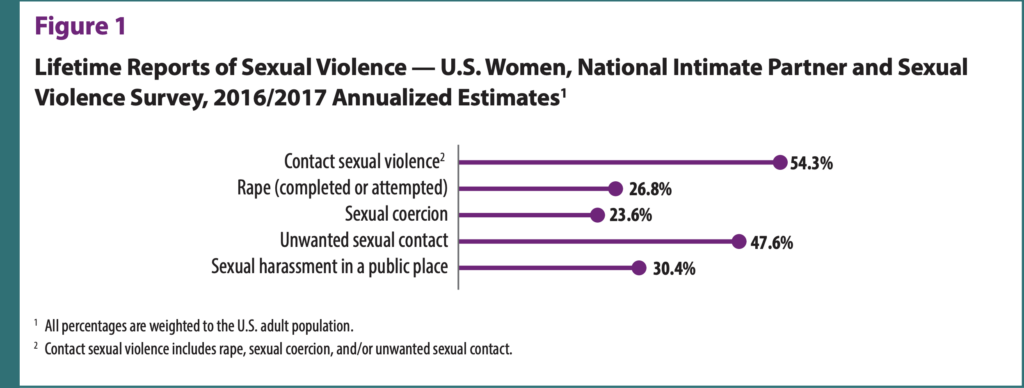
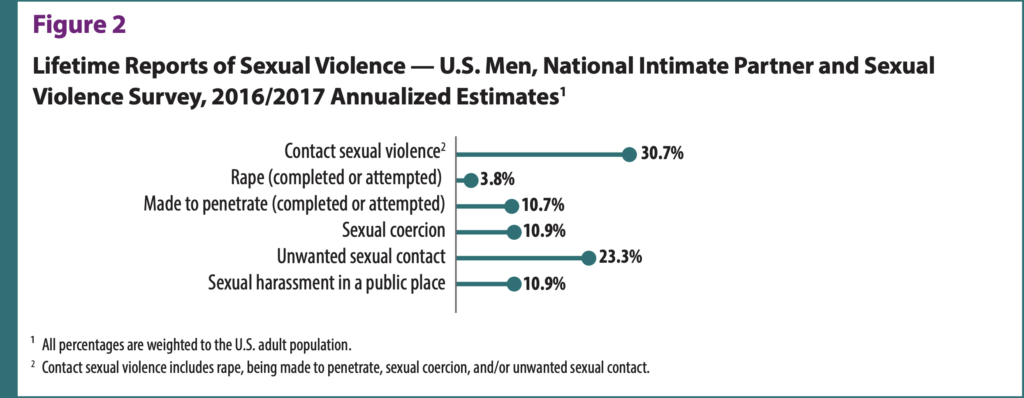
Women are more likely to experience sexual violence than men. According to the 2023/2024 National Intimate Partner and Sexual Violence Survey, nearly half of women (45.1%) experience some form of contact sexual violence in their lifetime compared to 16.9% of men.
This issue is prevalent in Oklahoma. From 2024-2025, women accounted for 88% (2,112) of rape victims and 79.5% (1,614) of unwanted sexual contact victims. The rate of rape/attempted rape among females reported to law enforcement has been 35-45% higher in OK than rates for the U.S. over the past decade.
The most common forms of sexual violence reported by women nationally (2023-2024) include unwanted sexual contact (39%), followed by attempted or completed rape (21%), followed by sexual coercion (20.3%).
Acts of sexual violence or harassment can occur anywhere. In 2024, 30.4% of women nationally reported experiencing sexual harassment in the workplace, 29.5% reported experiencing harassment in a public setting, and 28.2% were harassed online. The perpetrator is usually someone the victim knows.
Unlike other forms of violence, women often internalize experiences of sexual violence as a personal failing, igniting self-criticism, low self-esteem, and attachment issues. Internalization can often stem from social stigma or cultural norms that unfairly devalue victims experiences or equate victimization with a lack of agency. This fear of judgement from others or stigma may also lead women to not report their abuse, worsening health outcomes. These experiences often have lasting mental health impacts on women, leading to PTSD, depression or anxiety, or suicide (see Depression and Anxiety, Frequent Mental Distress, and Access to Mental Health Services).
Physical consequences of sexual violence are well documented. Survivors of sexual violence may have immediate injuries and later on develop chronic illness like cardiovascular disease, high cholesterol, and gastrointestinal disorders. There can be impacts to victims reproductive health, including heightened risk of acquiring an STD or unintended pregnancy as a result of assault. Survivors of sexual violence may develop negative health behaviors like smoking, substance abuse, self-isolation, or engaging in risky sexual behavior to cope with trauma.
The long-term mental and physical consequences of sexual violence can also affect women’s jobs and relationships. Survivors may need time off work to heal, and see their work performance diminish. This can lead to a lack of career or educational advancement and even job loss. This is especially true for the 1 in 7 women who quit their jobs or seek different employment opportunities after experiencing sexual harassment/violence in their workplace.
While most women have been impacted in some way by sexual violence, some face a higher risk than others. Women ages 16-19 are 4x more likely to experience sexual violence compared to other age groups. Racial disparities are present: Black, Multiracial, and Indigenous women experience sexual violence at higher rates, but are less likely to report it. Incarcerated women, those serving in the military, and LGBTQ+ folks are also more likely to experience sexual violence in their lifetime.
When lost productivity, criminal justice activities, and medical costs are all considered, estimates put the lifetime cost of rape at $122,461 per victim.